How to Choose the Right Aircond HP for Your Room
Confused about aircond horsepower ratings? Use our simple room size guide to choose the correct HP for every room in your Malaysian home. Avoid costly mistakes.
Getting the HP Right: Why Size Matters
We have all walked into a room in Petaling Jaya that feels freezing cold one minute and muggy the next. Often, this isn’t a fault with the air conditioner brand, but a simple miscalculation of horsepower (HP). In our line of work, we see that sizing is the single most common reason homeowners overpay on their monthly Tenaga Nasional Berhad (TNB) bills.
Choosing the correct HP is more than just guessing the room size. It is about balancing cooling power with humidity control. If you get this balance wrong, you face two expensive problems:
- The Undersized Unit: A 1.0 HP unit in a 1.5 HP room will run at maximum capacity non-stop. It will never reach the set temperature, and your electricity bill will likely jump into the higher tariff tier (currently 51.60 sen/kWh for usage above 300kWh).
- The Oversized Unit: A 2.0 HP unit in a small bedroom will cool the air too fast and shut off before it removes the moisture. You end up with a room that feels cold but “sticky,” and the constant start-stop cycle can cut your compressor’s lifespan by years.
At PJ Kool Aircond Service, we help customers across the Klang Valley match their cooling needs to their specific home layout. Here is the practical framework we use to get it right the first time.
The “Golden Formula” for Malaysian Homes
Many general guides suggest a standard calculation, but they often fail to account for Malaysia’s unique humidity and heat retention. The old “400 BTU” rule found in some manuals is often misunderstood or outdated.
In our tropical climate, we use a specific heat load multiplier. For a standard concrete home in the Klang Valley, you should calculate 65 to 75 BTU per square foot for bedrooms and 80 to 90 BTU per square foot for living areas.
Here is how that translates into the HP ratings you see in stores like Harvey Norman or on Shopee:
| Room Area (sq ft) | Recommended HP | Best Application |
|---|---|---|
| 80 - 130 | 1.0 HP | Small bedroom, study room, home office |
| 140 - 220 | 1.5 HP | Standard master bedroom, small living hall |
| 230 - 350 | 2.0 HP | Large master bedroom, condo living room |
| 360 - 450 | 2.5 HP | Terrace house living hall, open dining area |
| 460 - 600 | 3.0 HP (or 2x 1.5 HP) | Large open-plan layout, semi-D ground floor |
How to Calculate Your Room Size
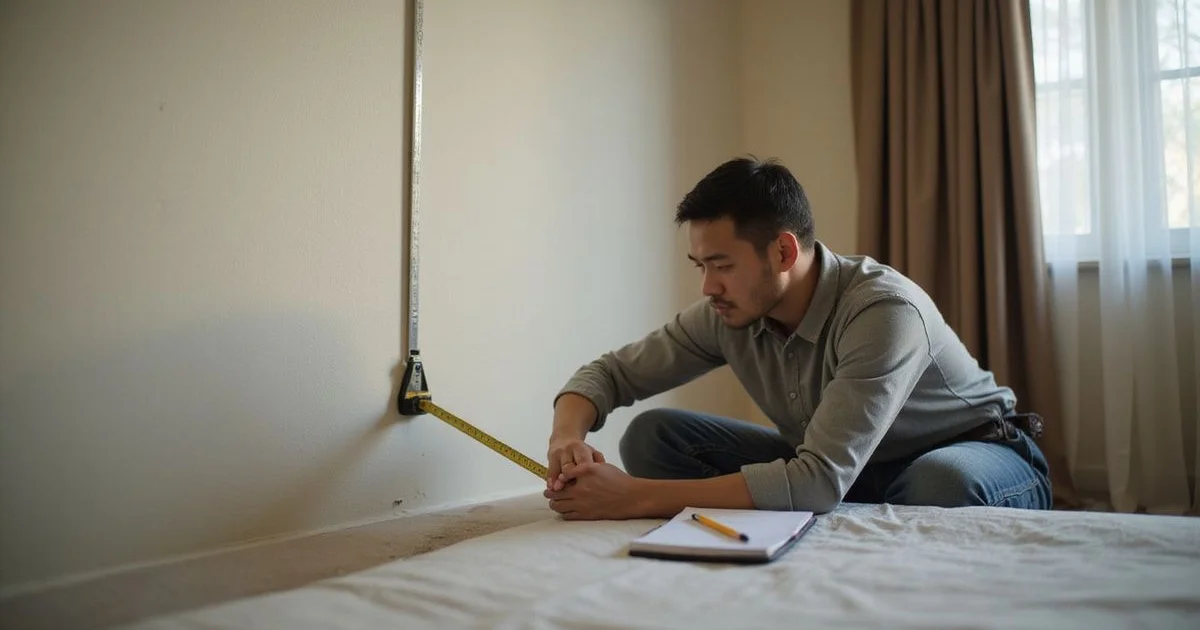
You don’t need a floor plan to get an accurate number. Just follow this simple method:
- Measure the length of the room in feet.
- Measure the width of the room in feet.
- Multiply Length × Width = Total Square Feet.
Real-world Example: A typical master bedroom in SS2 might be 15 feet long and 12 feet wide.
- 15 × 12 = 180 square feet.
- Looking at the table, this sits squarely in the 1.5 HP range.
Factors That Require Upsizing
The basic table works for a “perfect” square room with no windows, but most Petaling Jaya homes have specific features that add heat. We call these “Heat Load Multipliers.” If your room has any of the following, you will likely need to upsize your unit.
1. The “Glass House” Effect
Modern condos in areas like Ara Damansara or Mont Kiara often feature floor-to-ceiling windows. Glass is a poor insulator compared to brick.
- The Impact: A room with 50% glass walls heats up twice as fast as a standard room.
- Our Advice: If your glass area exceeds 20% of the wall space, add 0.5 HP to your calculation.
2. Ceiling Height Above 10 Feet
Standard sizing assumes a 9-10 foot ceiling. Many landed properties, especially renovated bungalows, feature double-volume ceilings (12-15 feet).
- The Impact: You are cooling a much larger volume of air, even if the floor space is small.
- Our Advice: For every foot above 10 feet, increase your required BTU capacity by 10%.
3. West-Facing Walls (The Afternoon Sun)
If your room faces the sunset (West), the walls absorb heat all afternoon and radiate it back into the room at night. This is common in older terrace houses where insulation is minimal.
- The Impact: The aircond has to fight the ambient heat of the walls before it can cool the air.
- Our Advice: Always upsize by 0.5 HP for west-facing bedrooms to ensure you can sleep comfortably by 10 PM.
4. Kitchen Proximity and Open Plans
Open-plan living is popular, but it means your living room aircond is also fighting heat from the kitchen.
- The Impact: Cooking generates massive heat spikes (up to 4,000 extra BTU).
- Our Advice: For open layouts connected to a kitchen, upsize by 1.0 HP or install a curtain divider to trap the cool air.
Inverter vs. Non-Inverter: Making the Right Choice
Once you know the size, the next question we always get is: “Is the Inverter model worth the extra RM300-RM500?”
The answer depends entirely on how you use the room.
When to Buy an Inverter (e.g., Panasonic X-Deluxe, Daikin FTKF)
Inverter units regulate the compressor speed to maintain a constant temperature without shutting off.
- Best for: Bedrooms or home offices used for more than 4 hours a day.
- The Data: An inverter unit can save 40-50% on electricity compared to a non-inverter if run for 8 hours. With current TNB rates, the unit typically pays for itself in savings within 18 months.
When to Buy a Non-Inverter (e.g., Acson Avo, Midea MSXS)
Non-inverter units run at full power until the room is cold, then shut off.
- Best for: Guest rooms, prayer rooms, or areas used for less than 2 hours at a time.
- The Logic: You don’t need energy efficiency for a unit that is rarely turned on. Save the money on the upfront purchase instead.
Common HP Recommendations for Malaysian Homes
Based on our aircond installation data in Petaling Jaya, here are specific configurations that work well for local property types:
Bedrooms
| Bedroom Type | Typical Size | Recommended HP |
|---|---|---|
| Small Single / Maid’s Room | 100-120 sq ft | 1.0 HP |
| Standard Middle Room | 140-180 sq ft | 1.0 HP (Cool) or 1.5 HP (Fast Cool) |
| Master Bedroom (Terrace) | 200-280 sq ft | 1.5 HP |
| Master Bedroom (Semi-D) | 300-400 sq ft | 2.0 HP |
Living Areas
| Area Type | Typical Size | Recommended HP |
|---|---|---|
| Condo Living Hall | 250-350 sq ft | 2.0 HP |
| Terrace Living Hall | 350-450 sq ft | 2.5 HP |
| Open Plan (Living + Dining) | 500-700 sq ft | 2x 1.5 HP or 1x 3.0 HP Cassette |
Pro Tip: For long, rectangular living rooms (common in terrace houses), installing two smaller units (e.g., two 1.5 HP units) often provides better airflow and redundancy than one massive 3.0 HP unit.
The Most Common Mistakes We See
Mistake 1: Prioritising Price Over Power
We often see homeowners buy a 1.0 HP unit for a 1.5 HP room because it was on sale. While you might save RM300 at the checkout, an undersized unit will run continuously at full load. This can add RM50-RM80 to your monthly bill, erasing your savings in less than a year.
Mistake 2: Ignoring the “Heat Island” Effect
Temperatures in urban areas like KL and PJ are often 2-3°C higher than forecast due to concrete retaining heat. A calculation that works for a house in a cooler rural area might not be sufficient for a concrete jungle like Section 14 or Bangsar. Always lean towards slightly more power rather than less.
Mistake 3: Guessing the Square Footage
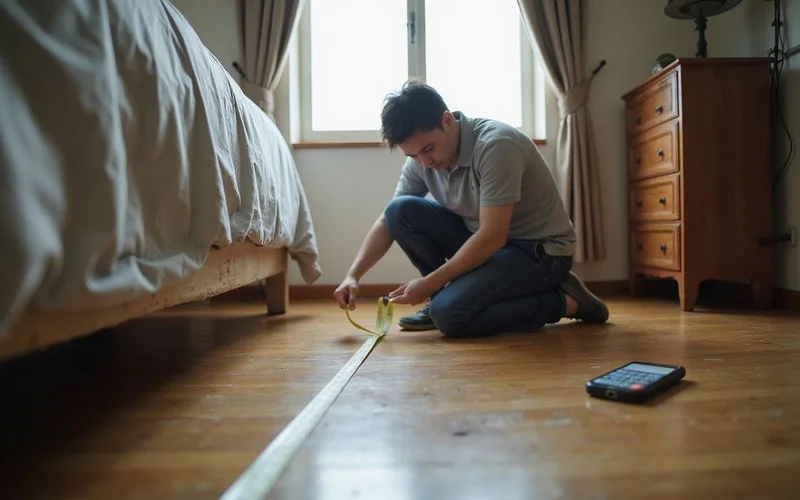
“It looks like a standard room” is a risky assumption. A difference of just 30 square feet can push you from a 1.0 HP requirement to a 1.5 HP one. Taking two minutes to measure with a tape measure is the only way to be sure.
When in Doubt, Consult a Professional
If your room has unusual characteristics—very high ceilings, large west-facing glass doors, or an L-shaped layout—standard tables might not give you the full picture. A professional assessment considers airflow patterns and heat sources that a calculator cannot see.
At PJ Kool Aircond Service, we offer on-site consultations to take the guesswork out of the process. We can visit your home, measure the specific heat load of your space, and recommend a unit that balances upfront cost with long-term energy savings.
Getting the HP right ensures your home remains a sanctuary from the heat, not a source of financial stress. It is one of the smartest investments you can make for your family’s comfort.