How Often Should You Chemical Wash Your Aircond?
Find out the ideal frequency for aircond chemical wash in Malaysia's tropical climate. Expert advice from PJ Kool Aircond Service on keeping your unit efficient.
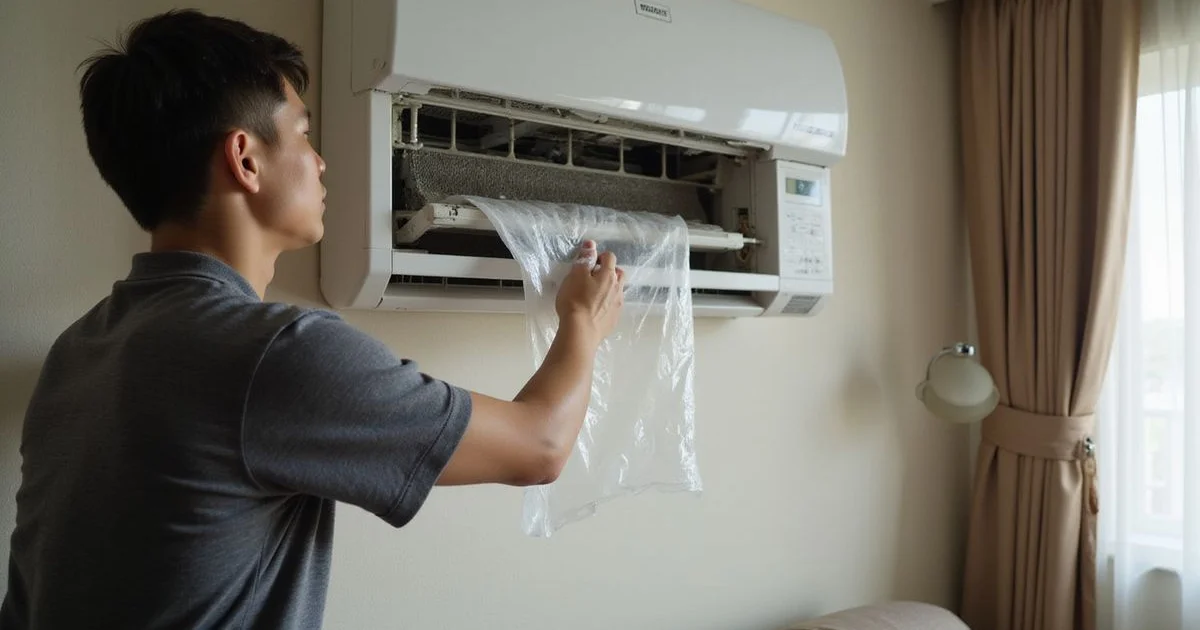
Why Chemical Wash Frequency Matters in Malaysia
You know that sticky feeling when you walk into a room, and even though the aircond is set to 18°C, the air still feels heavy? That is the humidity speaking.
In Petaling Jaya, where outdoor humidity averages around 80% year-round and often peaks above 90% in the mornings, your air conditioner is doing double duty. It is not just cooling the air; it is constantly extracting moisture. This creates a wet, dark environment inside your unit that is perfect for “biofilm”—a slimy layer of bacteria and mould that a standard filter clean simply cannot reach.
At PJ Kool Aircond Service, we have spent years servicing units from SS2 to Damansara, and we see the results of this tropical climate every day. One minute the unit is working fine, and the next, it is leaking water or blowing warm air because that internal buildup has finally clogged the system.
Most homeowners ask us, “How often should I really do this?”
The answer lies in the data, not just a guess. Let’s look at the usage numbers, the biological factors, and the cost implications to find the right schedule for your home.
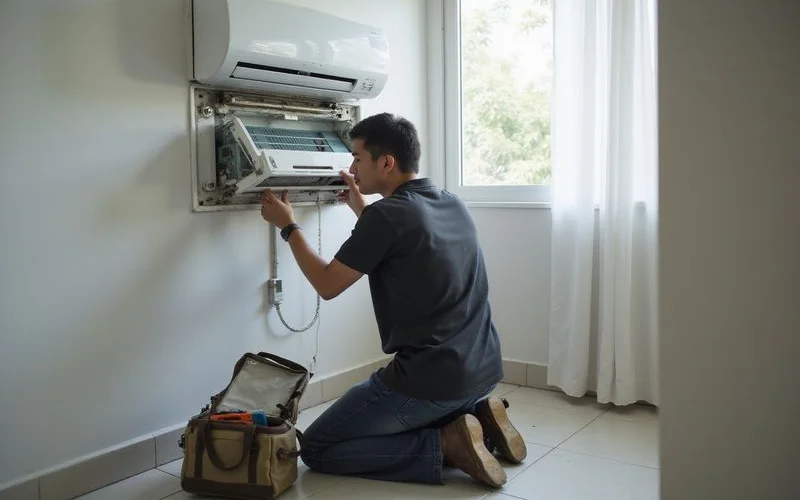
The General Rule: Every 6 to 12 Months
For most residential homes in the Klang Valley, a chemical wash is necessary every 6 to 12 months.
This timeline is based on the lifecycle of biofilm and mould growth in our tropical climate. Research on indoor air quality in tropical regions indicates that fungal colonies, such as Aspergillus and Penicillium, typically establish a stronghold on cooling coils within 3 to 6 months of continuous use. Once this growth hardens, normal water cleaning will not remove it.
Factors That Affect Chemical Wash Frequency
1. Usage Hours (The WFH Factor) If your aircond runs for more than 12 hours a day—common for bedrooms or home offices—you are processing twice the volume of air compared to a standard household. We find that units in “Work From Home” setups often require a chemical wash every 5 to 6 months to maintain efficiency.
2. Proximity to Major Roads Living near high-traffic zones like the LDP, Federal Highway, or Sprint Expressway introduces a specific type of pollutant: greasy road dust and rubber particles. This sticky particulate matter binds with moisture on your coils to form a “black sludge” that is harder to remove than normal house dust. Residents in roadside properties in Damansara Jaya or Kelana Jaya should expect to service their units more frequently.
3. The “Aircond Jelly” Risk In Malaysia, we frequently encounter a substance known locally as “jelly” or “slime.” This is actually a bacterial biofilm (Zooglea) that grows in your drainage pan and pipes. It creates a gelatinous blockage that causes water to back up and leak. If you have had jelly issues before, you should stick to a strict 6-month schedule to clear the bacterial buildup before it solidifies.
4. Age of the Unit Older units (5+ years) often have microscopic corrosion on the cooling fins, which creates rougher surfaces where dirt attaches more easily. Regular chemical washing helps clear this debris without damaging the aging metal, provided the right chemical concentration is used.
Our Recommended Schedule
| Situation | Usage Pattern | Recommended Frequency |
|---|---|---|
| Heavy / WFH | 12+ hours daily | Every 4-6 months |
| Standard Family | 8-10 hours (Nights only) | Every 6-9 months |
| Light User | Occasional / Guest Room | Every 12 months |
| Roadside Property | Near highways (Heavy dust) | Every 5-6 months |
Chemical Wash vs. Standard Service: What Am I Paying For?
A common confusion among homeowners is the difference between a “General Service” and a “Chemical Wash.”
A standard aircond service is maintenance; a professional chemical wash is restoration. In a chemical wash, we use specific alkaline-based solutions to penetrate the coil fins and dissolve the biofilm that water pressure alone cannot move.
| Feature | Standard Service (General Cleaning) | Chemical Wash (Deep Cleaning) |
|---|---|---|
| Goal | Maintenance & Dust Removal | Restoration & Bacteria Removal |
| Coil Cleaning | Water jet only | Chemical foam + Water jet |
| Blower Roller | Wiped or brushed | Dismantled & chemically washed |
| Drainage | Vacuumed | Chemically flushed to remove jelly |
| Bacteria Removal | Surface level | Deep penetration (99% removal) |
What Happens If You Skip Chemical Washes?
Ignoring this maintenance doesn’t just mean slightly warmer air; it has a direct financial impact on your monthly expenses.
1. The Tariff Jump
Tenaga Nasional Berhad (TNB) tariff structures penalise high usage. A dirty aircond can consume 20-30% more energy to reach the same temperature. This extra consumption can easily push your monthly usage from the lower-tier rate (for the first 200-300 kWh) into the higher blocks, or disqualify you from the Energy Efficiency Incentive (EEI) rebates available for lower-usage households.
2. Compressor Failure Costs
The compressor is the heart of your unit, and replacing it is costly. Market rates for a compressor replacement in 2025/2026 for a standard 1.0HP to 1.5HP unit range from RM600 to RM1,500, depending on the brand. Regular chemical washing reduces the strain on the compressor, preventing it from overheating and failing prematurely.
3. Health Risks
As mentioned, the mould species Cladosporium and Aspergillus thrive in our humidity. When the blower wheel is covered in mould, every rotation spreads spores into your bedroom air. This is a common trigger for morning sinus congestion and allergies that many Malaysians mistakenly attribute to “the weather.”
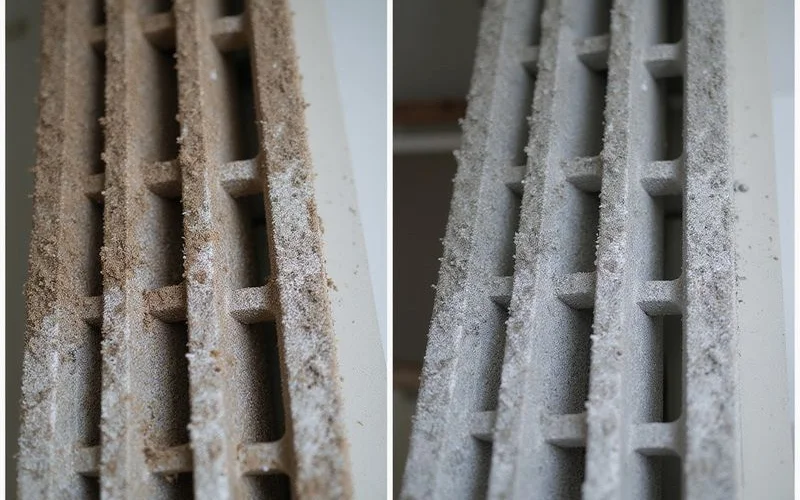
How to Tell It Is Time for a Chemical Wash
Beyond the calendar, your unit will give you physical signs that a standard clean isn’t enough.
- The Torchlight Test: Shine a light into the air outlet vents. If you see fuzzy grey or black clumps on the rotating blower wheel, that is mould, and it requires chemical removal.
- The “Musty” Smell: A sour or vinegar-like smell indicates active bacterial growth in the drainage pan.
- Weak Airflow: If the fan is set to “High” but the air feels like a gentle breeze, the internal coils are likely choked with debris.
- Water Dripping: This is the classic sign of “jelly” blocking the drainage pipe.
What Does a Chemical Wash Cost in Petaling Jaya?
Pricing varies, but be wary of quotes that seem too good to be true, as they often use harsh acidic chemicals that can strip the protective “Blue Fin” coating from your coils.
In Petaling Jaya and KL (2025/2026 rates), you can expect to pay:
- Wall Unit (1.0 - 1.5 HP): RM120 - RM160
- Wall Unit (2.0 - 2.5 HP): RM180 - RM220
- Cassette / Ceiling Unit: RM250 - RM350
- Overhaul (Full Dismantle): RM180 - RM300+ (This involves taking the unit off the wall completely).
At PJ Kool Aircond Service, we focus on transparent pricing. We also advise checking if the service includes a gas top-up, as some providers charge this separately (typically RM30-RM50).
Book Your Chemical Wash Today
If your unit hasn’t been deep cleaned in over a year, or if you failed the “Torchlight Test,” do not wait for a breakdown.
PJ Kool Aircond Service covers all areas in Petaling Jaya including SS2, Damansara Jaya, Taman SEA, Kelana Jaya, and the wider Klang Valley. We use safe, coil-friendly alkaline cleaners that remove the grime without corroding your unit’s delicate metal fins.
Contact us today to schedule your session, and let’s get your home feeling cool, crisp, and clean again.